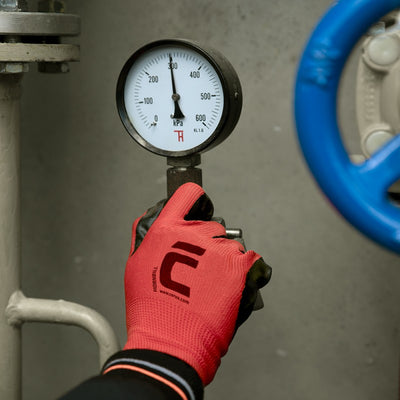



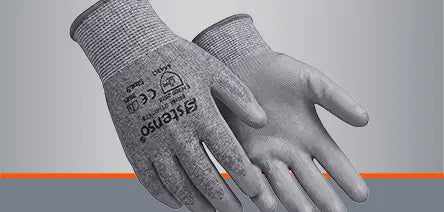
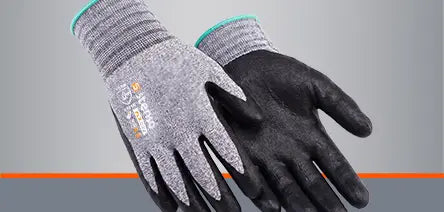
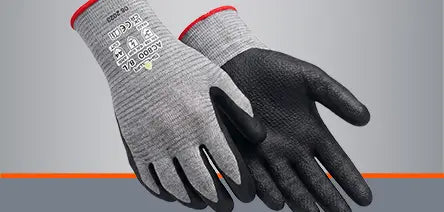
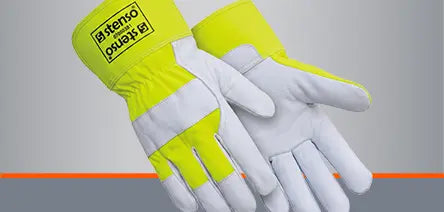
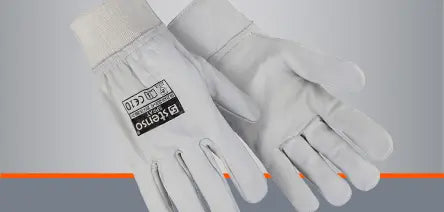
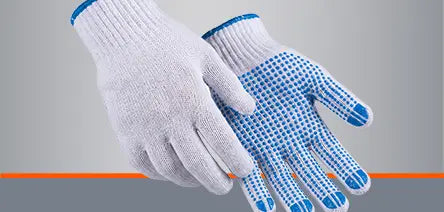
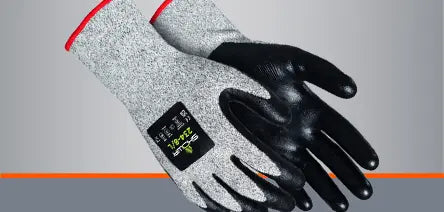
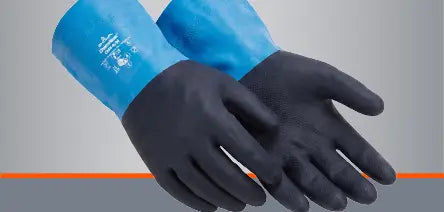
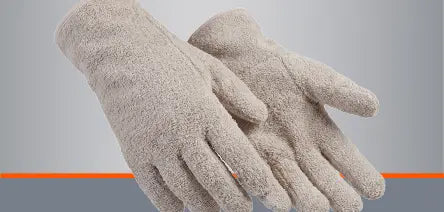
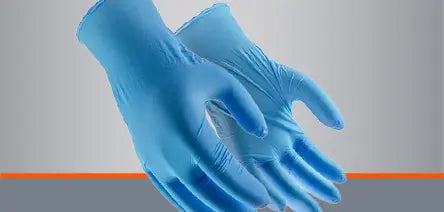


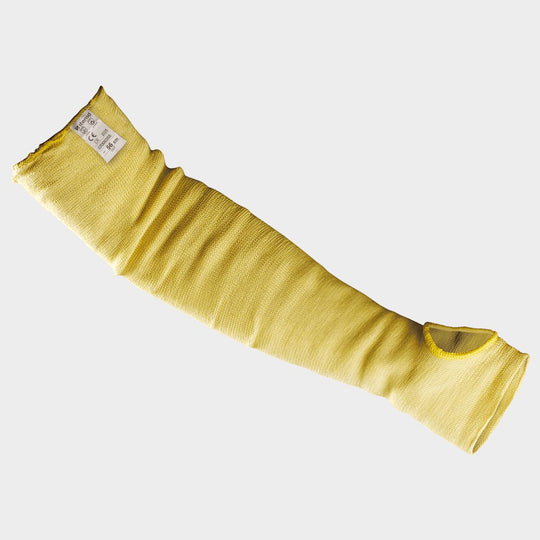


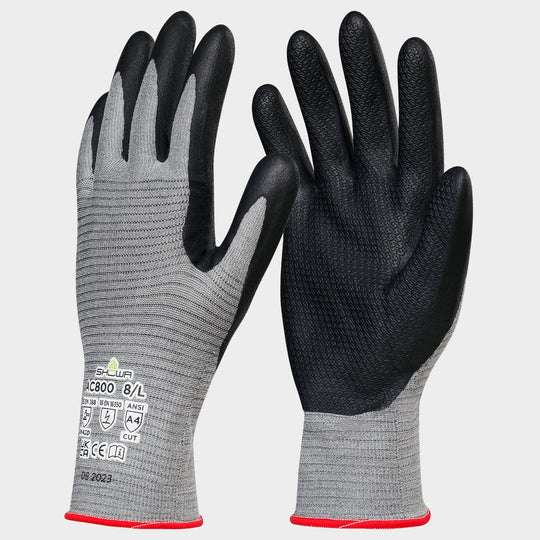

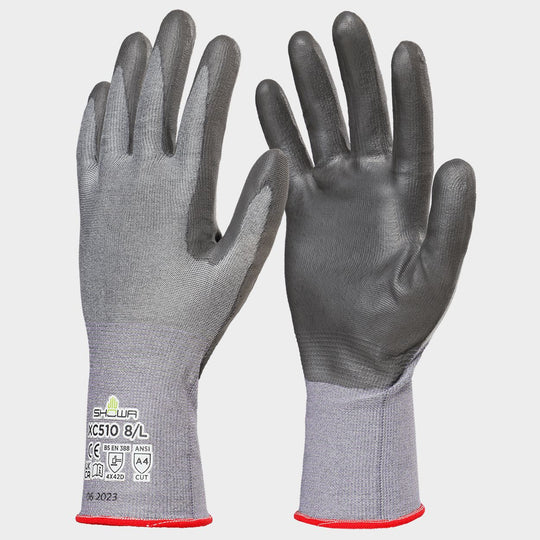
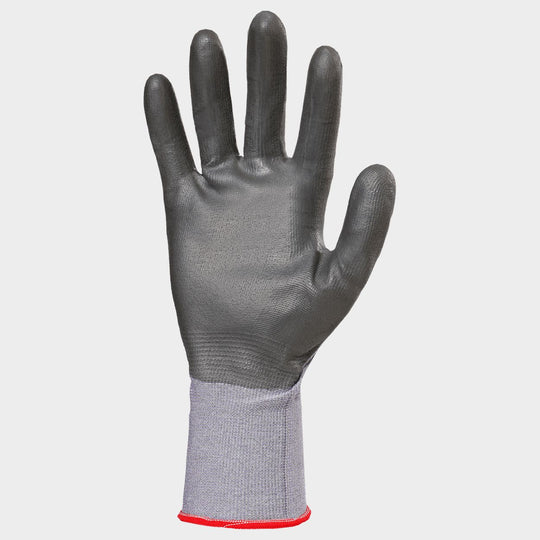


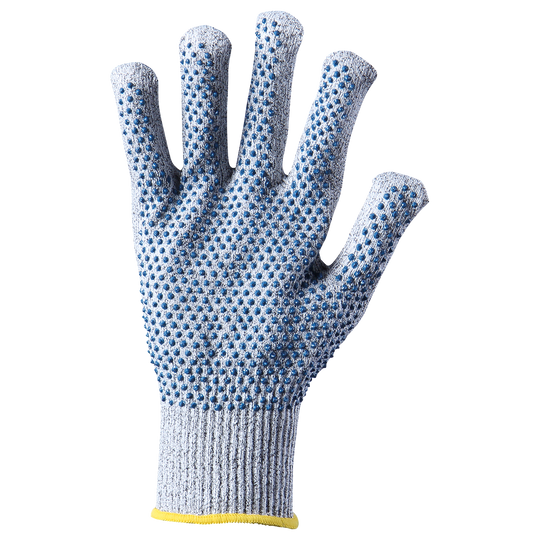

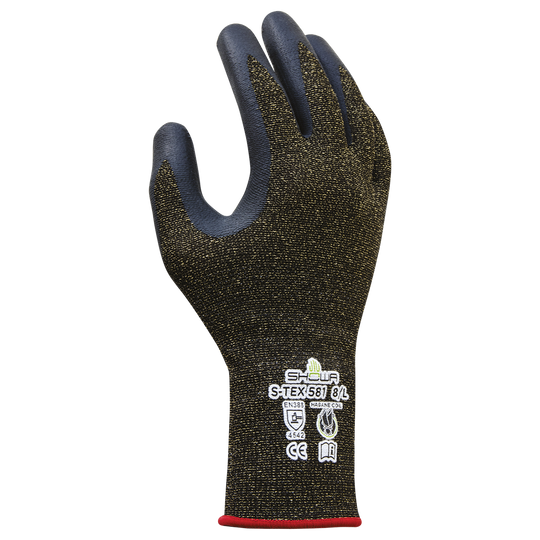


In the "Cut-Resistant Gloves" category, you will find professional solutions for hand protection when working with sharp objects, cutting tools, and materials with a high risk of cuts.
As a company with many years of experience in the field of personal protective equipment, at Bultex99 we select gloves that combine certified protection, practicality, and real comfort for all-day work. This type of gloves is an essential element of a safe working environment in industries where even a small mistake can lead to serious injuries.
What technologies make work gloves truly cut-resistant?
To provide real protection, cut-resistant gloves rely on a combination of specialized fibers, coatings, and construction. Each of these elements has a specific role and directly affects the level of safety and comfort during work.
At the base: Specialized fibers like HPPE and fiberglass
The core of cut-resistant gloves is the knit made from high-strength fibers. This is where cut resistance is achieved, measured by international standards.
The most commonly used materials include:
-
HPPE (High-Performance Polyethylene)
Material with exceptionally high cut resistance relative to its weight. HPPE fibers are lightweight, non-irritating to the skin, and allow the production of thin but very durable gloves.
-
Fiberglass and glass fibers
Added to the knit to increase resistance at higher risk levels. They significantly enhance protection without making the glove too bulky.
-
Composite yarns
A combination of different fibers that allows an optimal balance between protection, flexibility, and durability under intensive use.
Thanks to these materials, modern cut-resistant gloves provide protection that years ago was only possible with very thick and uncomfortable models.
The role of the coating: Grip and additional wear protection
Besides the knit, a crucial element is the coating on the palm and fingers. It improves grip and extends the glove's lifespan.
The most common solutions include:
-
nitrile coating – suitable for dry and slightly oily environments, with good wear resistance;
-
nitrile foam – provides better grip and comfort during prolonged work;
-
Polyurethane (PU) – preferred for tasks requiring high precision and sensitivity.
The right coating does not increase the cut protection level but significantly improves control and safety when working with smooth or sharp parts.
Balance between protection and dexterity: The importance of knit
The glove’s construction determines how comfortable it will be for daily use. In this context, knit density is a key factor. The most commonly used standards are 13G and 15G, with higher density meaning a thinner and more flexible glove.
This allows:
-
Better feel when working with small parts;
-
Reduced hand fatigue during prolonged wear;
-
Combining protection and dexterity in one glove.
In practice, this means that a well-designed cut-resistant glove does not hinder the work process but supports it.

How to choose the right cut protection level for your profession?
The choice of cut-resistant gloves should be aligned with the actual risk at the workplace. Too low protection is dangerous, while too high can lead to unnecessarily reduced flexibility.
Understanding the EN 388 standard: Protection scale from A to F
The EN 388 standard is the main reference for assessing the protective properties of Work glovesCut protection is indicated by letters from A to F, with each subsequent letter representing higher resistance. It is important to understand that this level specifically refers to cut resistance, not all possible mechanical risks.
For clearer guidance, the table below summarizes the main levels and their typical applications:
|
Protection level |
Suitable for activities |
|
A |
Minimal risk of cuts, light auxiliary tasks without direct contact with sharp edges |
|
B |
Light assembly tasks, working with low-risk tools |
|
C |
General industry, working with sheet metal and sharp edges |
|
D |
Automotive industry, glassmaking, metalworking |
|
E |
Heavy industry, working with very sharp parts |
|
F |
Extreme risks, maximum protection under heavy load |
This classification simplifies selection and helps avoid compromises in safety.
Niva B and C: Reliable protection for moderate risks
Gloves with levels B and C are suitable for activities involving contact with sharp edges, but the risk of severe cuts is controlled. They are often used in logistics, light assembly work, and general maintenance. Their main advantage is excellent flexibility and comfort during prolonged wear.
Levels D, E, and F: Maximum security for high-risk work
When working with glass, sharp metal sheets, or heavy industrial components, significantly higher protection is required. Levels D, E, and F are designed precisely for such environments. These gloves provide high cut resistance, while modern models manage to maintain good dexterity despite the increased protection.

Why trust Bultex99 for your cut-resistant gloves?
In Bultex99 We approach safety responsibly because we know it concerns people's health.
Certified protection you can rely on
All cut-resistant gloves we offer are selected in accordance with current European standards. Certification under EN 388 guarantees that the products are tested and meet real industrial safety requirements. This means a predictable and verified level of protection for everyday use.
A combination of innovative materials for protection without compromising comfort
In our range, you will find gloves that use modern fibers and coatings so that protection does not come at the expense of comfort. Comfort is a key factor in compliance with safety rules, as uncomfortable gloves are often not used properly or at all.
Experience, expertise, and affordable prices
Bultex99 is a well-established name in workwear and personal protective equipment. Our team selects solutions that meet the real needs of businesses and professionals. We strive to offer the best balance of price, quality, and protection without compromising reliability.
Properly selected cut-resistant gloves are an investment in safety, efficiency, and peace of mind in the workplace. Browse our full range, compare available models, and choose a solution that fits your profession and risk level.